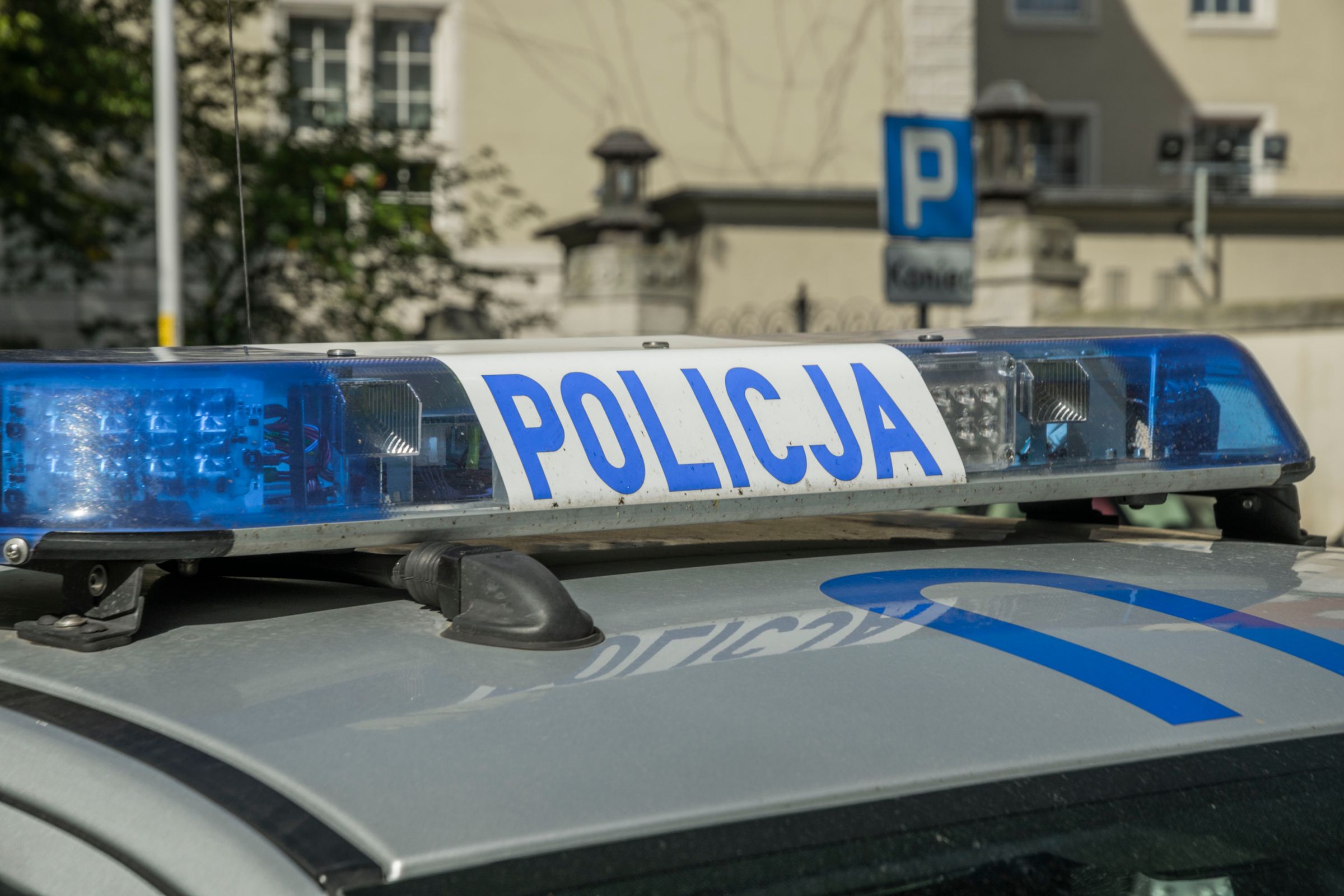
Kraków’s main market square, the commercial heart of a city that draws millions of visitors each year, became the site of one of Poland’s rarest events on Saturday afternoon: a mass shooting that killed six people and wounded 17, and whose suspected perpetrator has now died in hospital.
Polish police confirmed early on Monday that the gunman, a 24-year-old named in local media as Michal O, had succumbed to wounds sustained in a shootout with officers. He had been in critical condition since the attack. “We would like to inform you that the perpetrator of the tragic events died in hospital early this morning,” Malopolska Policja wrote on X.
The economic stakes are considerable. The suspect drove into the city’s main square, in the heart of the old town usually packed with tourists, at top speed at about 3pm on Saturday. Wearing military-style fatigues and a bulletproof vest, he began shooting at random as he took what Kraków police spokesperson Katarzyna Cisło described as a “wild ride” around the square. Five of the wounded are foreign nationals from Britain, Austria, Germany, Portugal and Russia, a detail that underscores how an incident in a single square ripples outward across borders and travel markets. Two police officers were also among the injured, one of whom was in a serious condition.
Among the dead was a Briton. Police confirmed on Sunday that three further bodies found at the gunman’s home after the attack were his father, 53, his mother, 52, and his sister, 21.
The attack shocked a country that had been considered safer than many of its European neighbours, a reputation that carries real weight for a tourism-dependent economy and for investor confidence in one of central Europe’s most stable markets. As two days of national mourning began, the national prosecutor’s office said on social media it had launched an investigation into “the killing of six people … using a firearm, and the attempted murder of many others, including police officers, this act constituting a terrorist offence”.
Meanwhile, the interior ministry, the government body overseeing policing and security costs, moved quickly to characterise the suspect’s motives. Karolina Galecka, an interior ministry spokeswoman, told radio TOK FM on Monday: “There were many different emblems on the perpetrator’s clothing that have been partially examined and interpreted.” She added: “These patches were associated with various motifs that are currently being analysed by specialists,” declining to comment further as the investigation was ongoing.
The interior minister, Marcin Kierwiński, said the suspect was fascinated with far-right ideologies and held “very radical” and “ultra-nationalistic” views. Authorities say he was probably inspired by far-right ideologies.
The shooting has deepened concern about extremism in Poland after several school stabbings in October that left one woman dead and which officials said were linked to extremist content online. For businesses operating in Poland’s retail, hospitality and tourism sectors, the combination of a rare mass casualty event and a rising pattern of extremist violence presents a new risk profile in a market long marketed on safety and stability.
The reference reporting on the case, including the police confirmation of the suspect’s death, can be found at https://www.theguardian.com/world/2026/nov/09/krakow-shooting-suspected-gunman-dead.
With the suspect dead, prosecutors’ terrorism investigation will now focus on motive, networks and the extremist material officials say shaped his views, questions that will determine how Polish authorities, and the businesses exposed to the square’s visitor economy, assess the cost of what happened there.