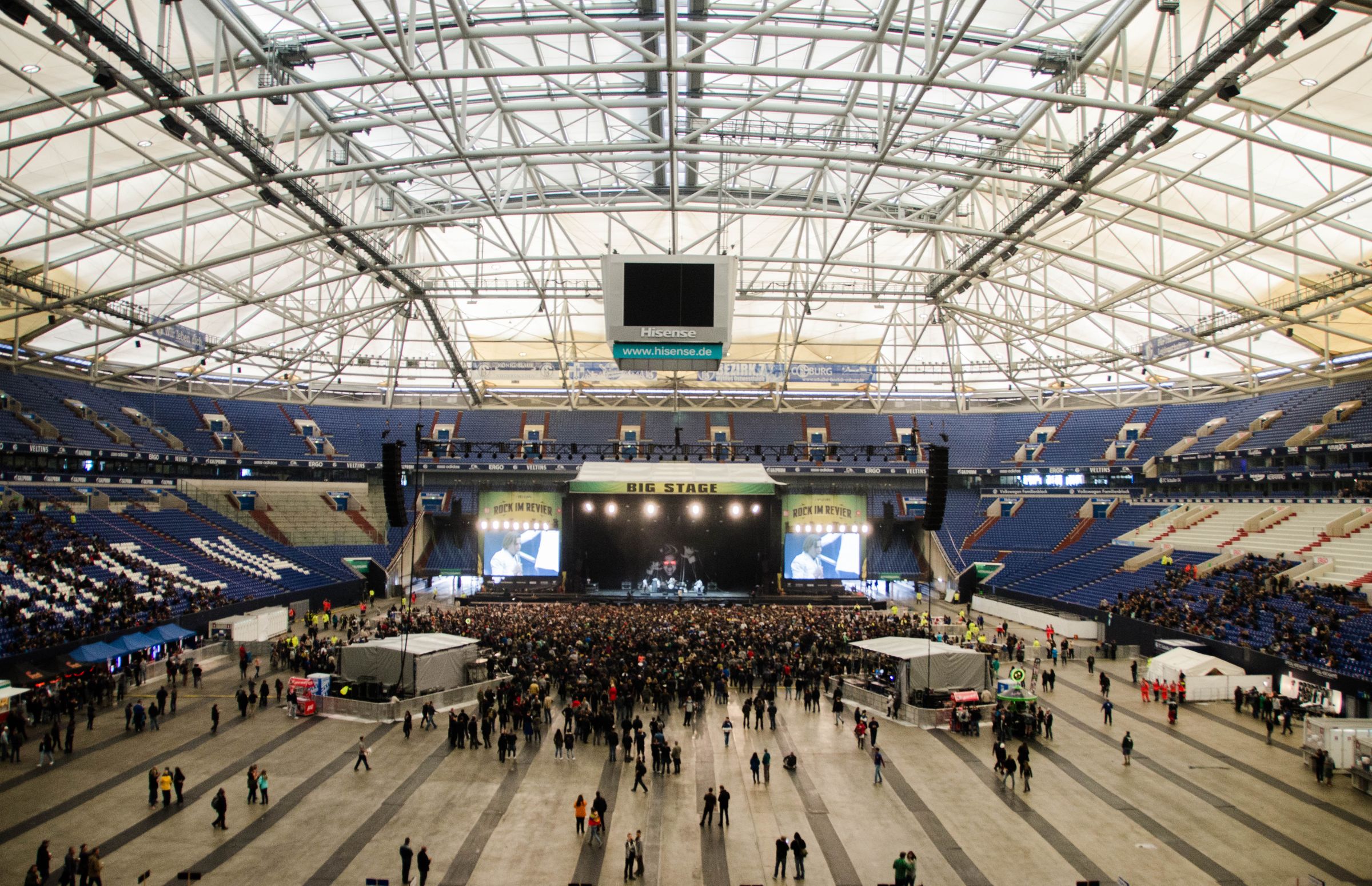
Show Jumping Returns to Accor Arena With New Format
A one-day indoor competition brings elite riders back to a storied Paris venue
The Accor Arena in Paris will once again host top-level show jumping when the Horse GP arrives on 2 December 2026, a one-day competition built around an entirely new format. For Christophe Ameeuw, the Belgian breeder and event organizer behind the project, the event represents an effort to restore equestrian sport to a venue whose operational history with the discipline stretches back decades, and to do so with a schedule, a course design and a broadcast plan designed to work in practice rather than only on paper.
The venue itself carries that history. Opened in 1984 in the 12th arrondissement of Paris as the palais omnisports, renovated in 2015 and renamed the Accor Arena, it has staged some of the most prestigious equestrian competitions in the world. In the late 1980s, crowds filled the hall to watch Jappeloup and his legendary rival Milton. The venue also hosted a World Cup final, and Pierre Durand’s 1986 World Cup performance at Bercy, as the site was long known, was significant enough to open the 1 p.m. national television news.
Ameeuw, who founded the Gucci Masters and organized Longines Masters events across the world, convened a lunch of former champions to mark the return. Among those present were Hervé Godignon, team bronze medallist at the 1992 Barcelona Olympics, and Philippe and Thierry Rozier. Their recollections underline both what the venue delivered at its peak and what has been missing since. Godignon described the tunnel linking the training ring to the competition ring, where he could hear the commentator asking the crowd to calm down after his name was announced, the applause and stamping in the stands so loud that horses unaccustomed to the noise overhead could quickly panic. Philippe Rozier, Olympic team champion at Rio in 2016, recalled his first ride there at the 1987 World Cup final, aged 24, with 15,000 people jumping with him at every obstacle. “Bercy is magical,” he said. Thierry Rozier, a former rider with the French team, noted that over the years those moments of communion with the public became a distant memory, and the “cauldron” became unknown to a new generation of riders.
What the Horse GP promises is a full evening of delivery. The day opens with a performance by the Cadre noir de Saumur and the internationally renowned artist Clémence Faivre. The sprint event follows: forty of the world’s leading riders, including 17 of the top 20 and the current world number one, Richard Vogel, will tackle a course of roughly ten obstacles set at 1.50 m, designed by Grégory Bodo and Santiago Varela. The objective is to leave every rail standing while posting the fastest time. As in a Formula 1 qualifying session, the sprint classification determines the starting order for the Grand Prix, though with a twist Thierry Rozier explained: riders deliberately aim for the last starting slots, which allows them to study their competitors’ rounds and gain a time reference. Passing immediately after a leader, he said, pushes riders to go faster and take risks, whether by choosing unusual lines or sending the horse two meters earlier at an obstacle to gain a tenth of a second. Louis Rossi, the noted racing driver and keen rider present at the lunch, drew the parallel directly: there are many similarities between the two sports, he said, “like on a circuit.”
The Grand Prix itself, classified five stars by the International Equestrian Federation, the highest level of competition, will be held in the early evening over 12 obstacles at 1.60 m. Philippe Rozier predicted that all the cards would be reshuffled, that the start list contains no fillers, every rider capable of winning, and that the eight best would finish within two seconds of each other. The twelve best combinations of the day will then contest a final speed round, the jump-off, before a concert by Mosimann, the artist’s first at the Accor Arena.
Meanwhile, execution on the ground appears well advanced. The event will be broadcast live on France Télévisions, and tickets are already on sale. Nicolas Canteloup, himself a rider, summed up the proposition: “It is the gathering of the best horses in the world, animals that have always fascinated mankind, and a mythical venue for our discipline. I can’t wait to be there.” Whether the new format can bring the old Bercy atmosphere back to a generation of riders who never knew it is the open question for December. Further detail on the event and its history at the venue can be found at https://www.parismatch.com/actu/sport/cest-la-reunion-des-meilleurs-chevaux-au-monde-lequitation-de-retour-a-laccor-arena-278004.
Q&A
When and where will the Horse GP take place?
On 2 December 2026 at the Accor Arena in Paris, in a one-day competition with an entirely new format.
How does the new format work?
A sprint event over roughly ten obstacles at 1.50 m determines the starting order for the five-star Grand Prix over 12 obstacles at 1.60 m. Riders deliberately aim for the last starting slots to study competitors' rounds, and the twelve best combinations contest a final jump-off.
Who is organizing the event and who is competing?
Christophe Ameeuw, founder of the Gucci Masters and organizer of Longines Masters events, is behind the project. Forty leading riders will compete, including 17 of the top 20 and current world number one Richard Vogel.
What is the delivery status of the event?
Execution appears well advanced: the event will be broadcast live on France Télévisions and tickets are already on sale, with the day opening with a Cadre noir de Saumur performance and Clémence Faivre, and closing with a concert by Mosimann.