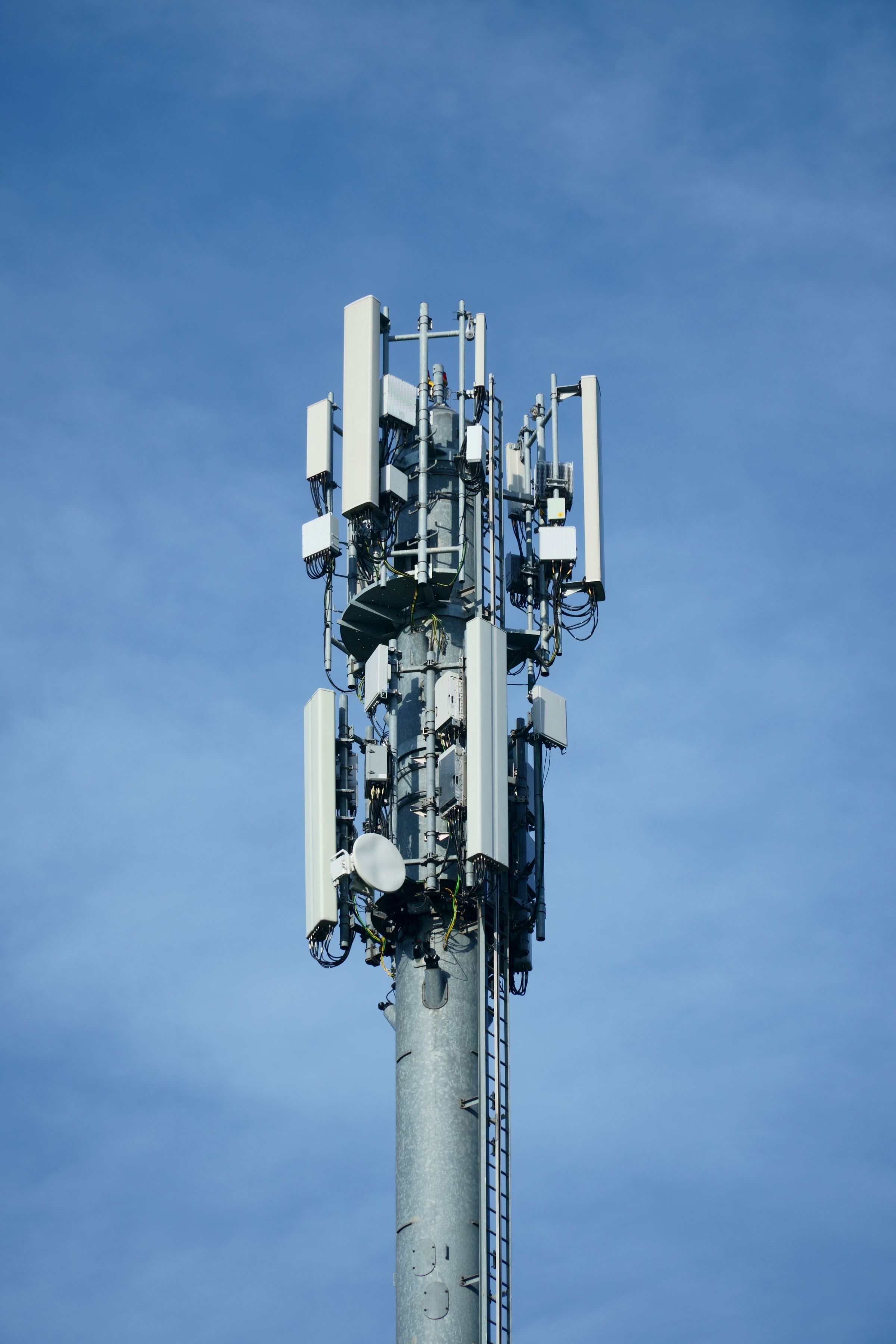
TDF has extended its 5G Broadcast experiment to La Réunion, mobilising two transmission sites, Saint-Pierre-Hyacinthe in the south of the island and Saint-Denis-La Montagne in the north, to carry live coverage of the 34th edition of the Grand Raid, scheduled from 15 to 18 October 2026. The delivery infrastructure behind live television is getting its most demanding test yet.
The operation is being run with France Télévisions, Antenne Réunion and Web TV Grand Raid, and forms part of a progressive rollout of terrestrial television to mobile devices. After initial trials in Paris, Reims, Bourges and Le Havre, followed by the opening of new zones in Nantes and Vannes, this Réunionnaise phase brings the system to an overseas territory for the first time.
The technical setup is deliberately simple in principle. Rather than streaming, which requires an internet connection and consumes bandwidth for every individual viewer, 5G Broadcast works on a transmission model comparable to digital terrestrial television, or TNT. An audiovisual signal is emitted once from a broadcast antenna and can be received simultaneously by a very large number of users within the coverage zone. Reception consumes no mobile data, requires no SIM card, and avoids multiplying individual connections for the same content. Crucially for operators assessing reliability, reception quality does not depend on how many people are connected at once.
For this trial, the broadcast offer includes France Télévisions programmes, notably the competition images carried by Réunion La 1ère, Antenne Réunion’s output, and the transmissions of Web TV Grand Raid. The stated goal is to demonstrate that a major sporting event can be followed directly on a compatible smartphone without relying on traditional mobile telephony networks or a Wi-Fi connection.
The choice of venue is not incidental. La Réunion presents a genuinely difficult environment for radio signal propagation, with volcanic relief, mountainous cirques, deep valleys and shifting weather conditions. By mobilising its Saint-Pierre-Hyacinthe and Saint-Denis-La Montagne installations, TDF intends to evaluate how 5G Broadcast performs in conditions unlike those encountered during the earlier metropolitan experiments. The phase is designed to study reception quality, signal robustness and the possibilities for broadcasting in an insular environment of complex geography. Findings will be added to the results already gathered from tests in several French urban areas.
The Grand Raid itself offers a useful stress test of the delivery model. The ultra-trail competition draws thousands of participants, support crews and spectators each year, concentrated around the starts, the refreshment points and the finishes. At such gatherings, simultaneous smartphone use can heavily load mobile networks and degrade streaming quality. 5G Broadcast is designed precisely to bypass that problem by distributing content independently of mobile internet traffic. For broadcasters, the technology also offers an additional route to distribute channels and live programmes while preserving free, open access to television.
One practical limitation remains: reception requires a device compatible with 5G Broadcast. The experiment does not mean that every smartphone currently on the market can automatically access the transmitted programmes.
Karim El Naggar, TDF’s chief executive, framed the Réunion stage as evidence of the technology’s operational value. “With this new step in La Réunion during the Diagonale des Fous, 5G Broadcast demonstrates its relevance for major sporting and popular events. Broadcasting the images of France Télévisions live on mobile, without risk of network congestion and in free access, illustrates exactly the added value of modern terrestrial broadcasting. Our ambition remains constant: to build step by step, with the publishers and the entire ecosystem, a robust, sovereign and complementary solution to bring live television to every screen.”
Through the programme, TDF aims to prepare a new generation of mobile audiovisual services capable of complementing existing distribution modes such as TNT, satellite, mobile networks and streaming platforms. The Réunionnaise experiment also underlines the role overseas territories can play in developing and evaluating new broadcast technologies.
The technology remains at an experimental stage, but its prospects extend beyond sport. In time, it could improve access to television while on the move, reduce the strain on cellular networks during high-audience events, and strengthen the resilience of audiovisual distribution. With this latest deployment, TDF continues toward its stated objective: making terrestrial broadcasting a complementary solution that lets the public watch live television free of charge on mobile screens. Whether the island’s volcanic terrain cooperates will be answered in October 2026.