Parallel rape trials ran side by side, only one drew a crowd
Two south London courtrooms, one shared process, wildly different public attention
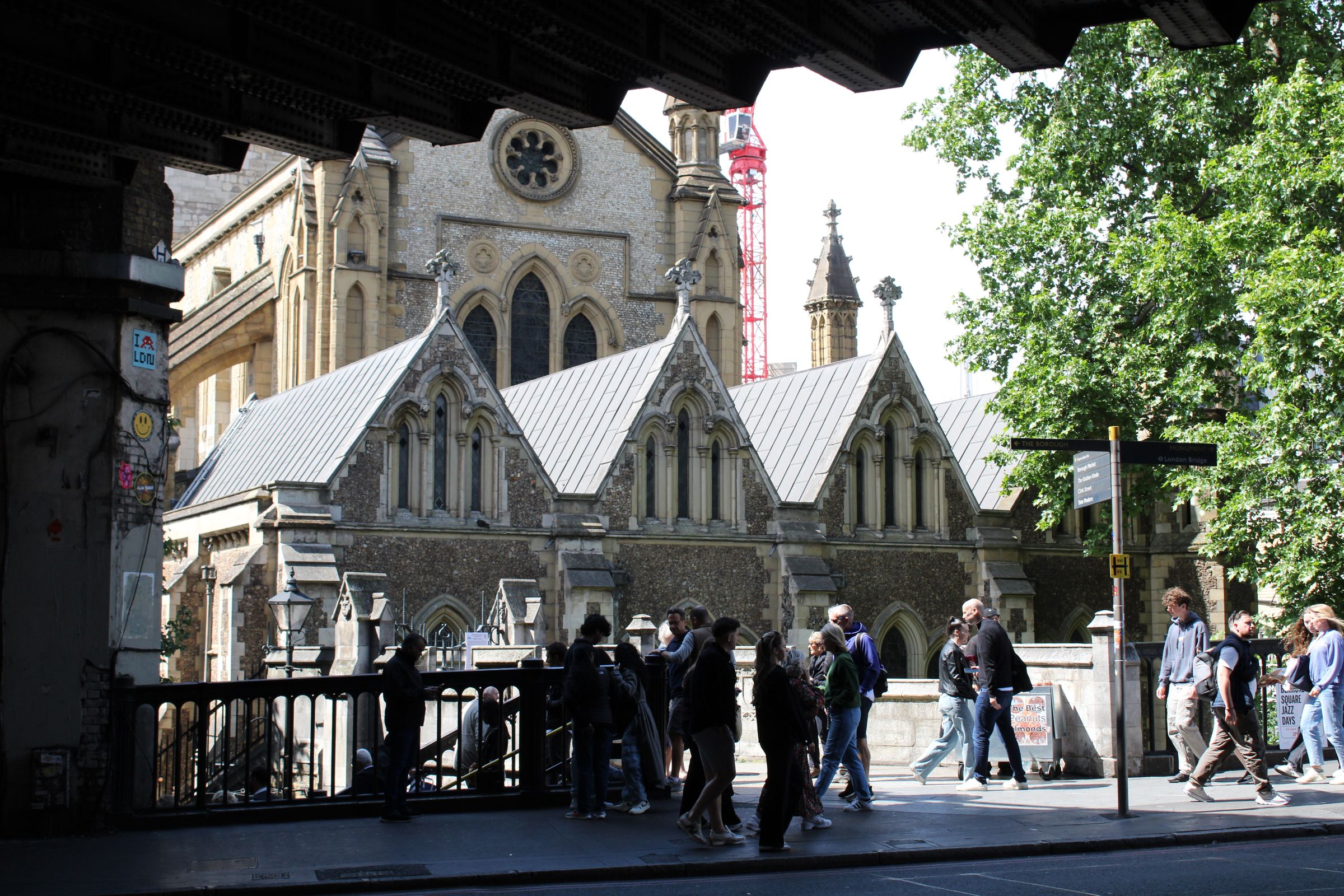
Inside two courtrooms on Borough High Street, the machinery of rape trials ran at the same time, at opposite ends of the same south London street. One case, at Southwark crown court, drew 108 journalists, daily podcasts and a media scrum forming before 7am. The other, a 15-minute walk away at Inner London crown court, drew one. The contrast in attention was stark. The process, in practice, was remarkably the same.
The case that attracted the world’s cameras was that of Russell Brand, the comedian and actor, now 51, who faced seven charges brought by six unconnected women: three counts of rape, three of sexual assault and one of attempted indecent assault, relating to alleged offences between 1999 and 2009. He denied all of them. The prosecution, led by Riel Karmy-Jones KC, described a man on a mission to sleep with 5,000 women, quoting a 2017 interview in which he described women as “amusements in his playground of orgasms”. His defence barrister, Ian Winter KC, did not attempt to paint him positively. His argument, in essence, was that Brand’s behaviour may have been disgusting, distasteful and immoral, but that immorality is not illegality. Everything turned on consent.
A mile away, in court 9 of Inner London crown court, a 32-year-old data analyst, referred to here only as Michael at his own request, stood trial for the rape of a 17-year-old girl. A prosecution barrister told the jury how, on the afternoon of 17 June 2025, Michael, driving through London in his BMW on his way to get a haircut, spotted the girl walking home from college with a 15-year-old friend, pulled up at the kerb and asked for her number. They met in a Morrisons car park, bought alcohol, and were driven to a nearby flat, where, the complainant says, he dragged her on to his lap and raped her four times over about an hour. His defence rested, like Brand’s, on consent: no one denied intercourse happened.
The physical infrastructure of both courts told its own story. The chairs were frayed, exposing yellow foam. At Southwark, the lifts were temperamental; in the neighbouring court the technology did not always work and the heating swung between sweltering and icy. In court 3 at Southwark, there was no space for the public at all, and journalists without seats were directed to an overflow room, court 15, where one morning a man in his late 70s in a beige mac watched discussions of sexual assault while eating Halls cough sweets. The typing of around 30 journalists whenever a disturbing fact emerged was so loud that even the judge remarked on it; one witness’s evidence sounded, to the reporter present, like a tropical rainstorm on a tin roof.
The operational sequence in both trials followed the same template. Police interviews with complainants, recorded when they first reported the rapes, were played on screens. A female prosecution barrister questioned the complainant; a male defence barrister cross-examined her. None of the women was asked about her sexual history, and both defence teams acknowledged that rape victims may not scream, resist or run. Yet the questioning that followed was intense. The teenager in the Inner London case was asked, step by step, whether and how she said no, and why she accepted a lift home. At one point, pressed on whether she was dragged on to the defendant’s lap, she began to howl from behind the reddish velvet curtain across the witness box, a loud, uncontrolled cry. The court clerk fetched tissues. The judge told her she need not apologise: the point was getting the best evidence, and that could not happen if she was very distressed. “I didn’t have sex. I was raped,” she said firmly. “We didn’t have sex again. I was raped.”
The system’s constraints shaped both hearings. Brand, because of his celebrity status, was allocated court 6 to retire to during breaks; his father, Ron, was not invited and sat on corridor sofas. Brand was not locked in the dock; Michael was, and his father reached out to brush his son’s hand as he was taken down. Judges in both cases had to instruct defendants to drop euphemisms. “Don’t be too coy or shy,” Mr Justice Bennathan told Brand. “We are all grown up here.” Michael, giving evidence, mumbled and eventually mimed the sex act in the witness box. “I know it is embarrassing, which may be why you are mumbling,” the judge said.
Meanwhile, the attrition statistics frame what these two functioning courtrooms represent. Only 9% of adult rape allegations reported to police ever reach court, because of the psychological toll on complainants and the difficulty of assembling evidence the Crown Prosecution Service considers sufficient, particularly in “he said, she said” cases. Around 3,000 rape cases are heard each year in England and Wales, with a conviction rate of roughly 53% among those that get that far.
The verdicts arrived within days of each other. Michael’s jury, nine women and three men, deliberated for six hours and two minutes and returned a split verdict: guilty of two of the four rapes and of assault by penetration, not guilty of oral rape and another rape. He was subsequently sent to prison for a number of years; the reporter was the last woman he spoke to before that happened. Brand’s jurors took eight and a half hours to find him guilty of one charge of rape and three of sexual assault, and not guilty of two counts of rape and one of attempted indecent assault. Bail until sentencing was refused; the judge indicated a lengthy custodial sentence was likely. On Monday, Brand was sentenced to more than 10 years in prison.
Metropolitan police Det Supt Andy Furphy called the outcome a “watershed moment”, a final reckoning for the laddish culture of the 90s and 00s, the era that saw the Sun name Brand “shagger of the year” three years running. But the trial down the road, concerning events from just last year, suggests something less settled: that if laddishness has fallen out of fashion, a new, manosphere-driven era of male entitlement has simply taken its place. Whether the courts of Borough High Street, with their temperamental lifts and frayed chairs, can keep pace with what flows through them remains the open question.
Q&A
How did media attention differ between the two trials?
Russell Brand's trial at Southwark crown court drew 108 journalists, daily podcasts and a media scrum forming before 7am, while the trial at Inner London crown court, a 15-minute walk away, drew one journalist.
What charges did each defendant face and what were the outcomes?
Brand faced seven charges brought by six women: three counts of rape, three of sexual assault and one of attempted indecent assault, alleged between 1999 and 2009; he was convicted of one rape and three sexual assaults and sentenced to more than 10 years. Michael, a 32-year-old data analyst, was tried for the rape of a 17-year-old girl and was convicted of two of four rapes and assault by penetration, receiving a prison sentence of a number of years.
What did the courtroom conditions reveal about the courts' capacity?
The chairs were frayed, Southwark's lifts were temperamental, technology in the neighbouring court did not always work, heating swung between sweltering and icy, and court 3 at Southwark had no public space, sending journalists to an overflow room, court 15.
What attrition statistics frame these trials?
Only 9% of adult rape allegations reported to police reach court, due to the psychological toll on complainants and the difficulty of assembling evidence the Crown Prosecution Service considers sufficient. Around 3,000 rape cases are heard each year in England and Wales, with a conviction rate of roughly 53%.